February 24, 2026
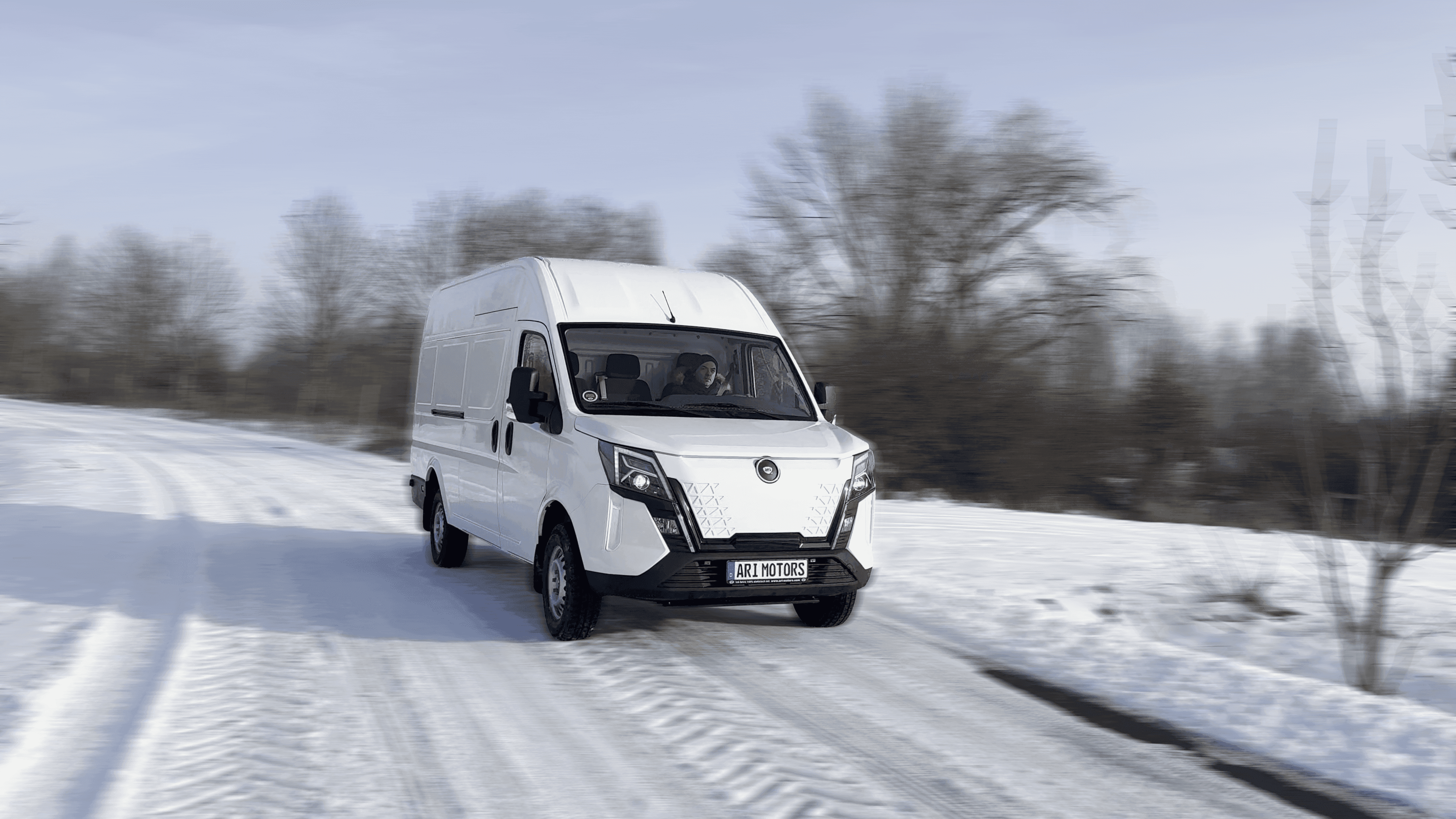
How does the ARI 1710 e-transporter perform in winter?
Winter, cold, slush - for many companies, the vehicle fleet is particularly challenged in the cold season. But how suitable is a large electric van for everyday use in these conditions? Here we answer the most important questions about the ARI 1710 in winter use.
Is the ARI 1710 generally suitable for winter use?
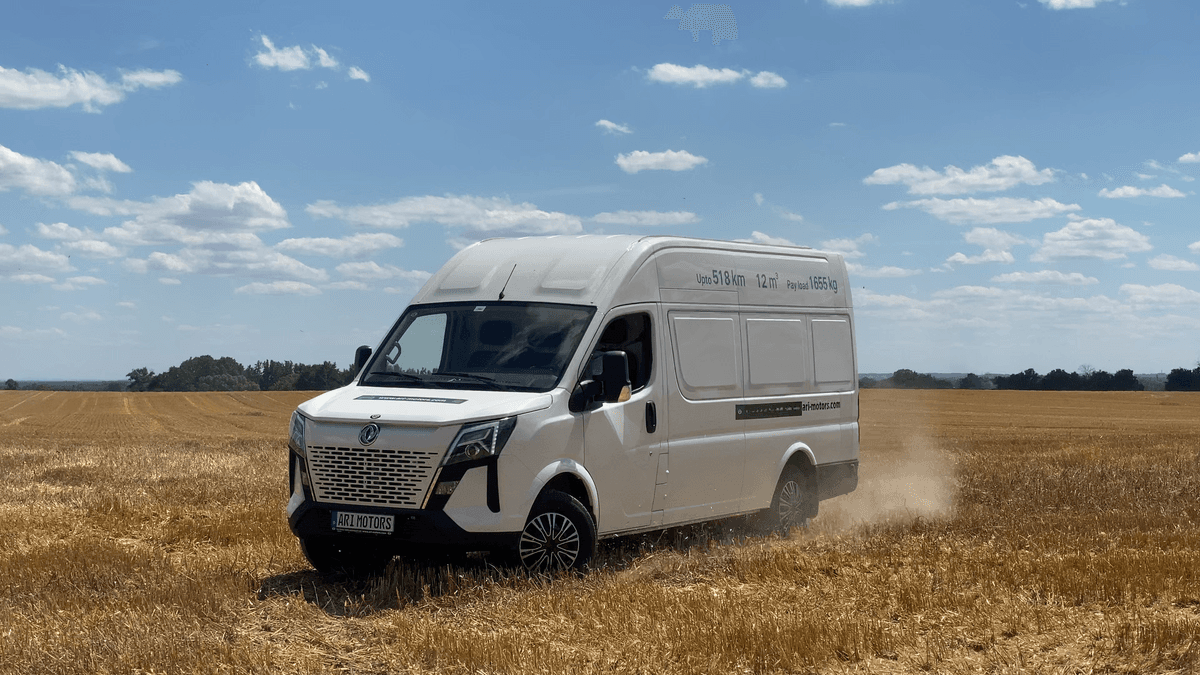
Yes, the ARI 1710 is designed for year-round use - even at low temperatures and in winter road conditions. With its robust construction, transporter tires and a maximum gradeability of 25%, the vehicle is suitable for professional applications in winter.
How does the rear-wheel drive of the ARI 1710 behave on snow?
The ARI 1710 has rear-wheel drive - a proven concept in the commercial vehicle sector. In combination with suitable winter tires, the transporter offers solid traction on snow and slush.
Especially when the vehicle is loaded, the weight on the rear axle has a positive effect on traction. Snow chains are generally not required for normal winter road conditions.
How much does the range decrease in winter?
As with all electric vehicles, low temperatures and the use of the heating affect the range. With the ARI 1710, additional consumption of around 20-25% is to be expected in winter.
In concrete terms, this means that with a range of up to 450-500 km, the realistic winter range is around 350-380 km.
This is still more than sufficient for many commercial applications in regional distribution transport.
Is the load compartment of the ARI 1710 also heated?
No. Only the driver's cab is heated. This has a clear advantage: the interior heats up faster and more efficiently, while energy consumption remains moderate compared to large-volume passenger cars.
This aspect is an important efficiency factor in winter, especially for commercial vehicles with a large load compartment.
Is the ARI 1710 also suitable for highways in snow?
Yes, the ARI 1710 reaches a top speed of 100 km/h and is therefore fully suitable for highways - even in winter. The prerequisites are, of course, an appropriate driving style and suitable winter tires.
What technology supports winter use?
The ARI 1710 has a robust and practical design:
-
McPherson independent front suspension
-
Rigid axle with leaf springs at the rear
-
Disc brakes at the front, drum brakes at the rear
-
Steel rims with transporter tires
-
25 % maximum gradeability
This combination ensures stability, load capacity and suitability for everyday use - even in difficult road conditions.
What about loading in the cold?
The ARI 1710 can be charged flexibly:
-
AC charging via type 2
-
DC fast charging via CCS with up to 50 kW
This means that downtimes can be planned efficiently even in winter and tours can be organized flexibly.
For which sectors is the ARI 1710 particularly suitable in winter?
The ARI 1710 is particularly suitable for:
-
Parcel and courier services
-
Craft businesses
-
Municipal operations
-
logistics companies
-
Service and workshop vehicles
Especially in urban and regional areas, companies benefit from locally emission-free driving - regardless of the season.
Conclusion: Can the ARI 1710 also impress in winter?
Yes - the ARI 1710 is not a fair-weather vehicle, but a fully-fledged electric transporter for everyday use. With a solid range, stable road holding, sufficient climbing ability and tried-and-tested technology, it is a reliable partner for companies even in the cold.
Anyone looking for a large electric transporter that remains operational even in snow and sub-zero temperatures will find an economical and sustainable solution in the ARI 1710.